For U.S. ecommerce companies preparing to expand, growth creates an exciting opportunity, and yet, expose weaknesses in fulfillment operations.
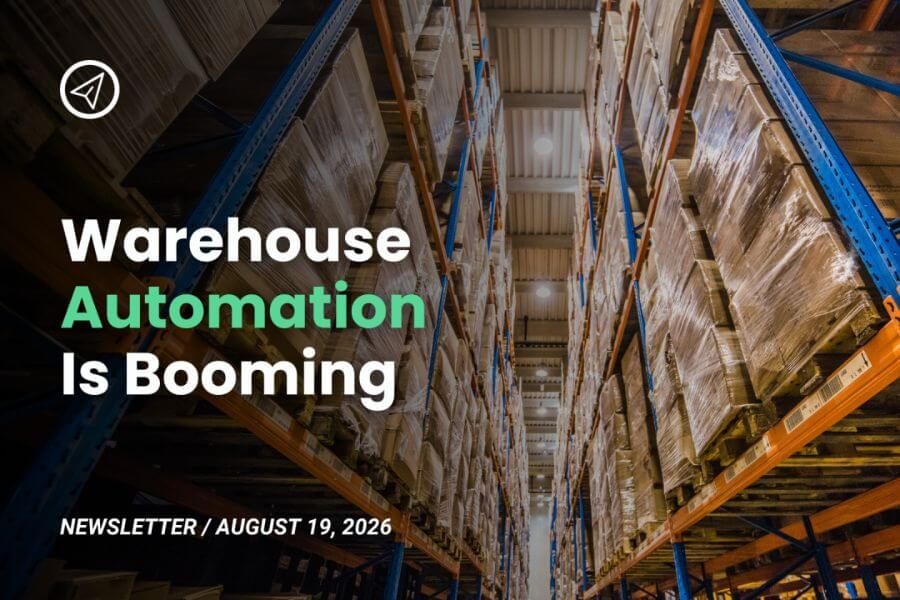
As order volumes increase and businesses begin shipping to more customers, regions, or international markets, warehouses must process more inventory without sacrificing speed or accuracy. That is one reason warehouse automation is becoming increasingly important across the U.S. logistics industry.
From automated picking and inventory systems to robotics and real-time warehouse management technology, businesses are investing in tools designed to move products through fulfillment centers faster and more efficiently.
But for growing ecommerce brands, the bigger question isn’t necessarily whether they should build an automated warehouse themselves. It’s whether their fulfillment network is capable of supporting the next stage of growth.
Expansion Creates New Fulfillment Challenges
A fulfillment operation that works for 500 orders per month may struggle at 5,000.
As companies grow, they often encounter challenges including:
- Higher picking and packing volumes
- Increased inventory complexity
- Greater pressure for faster delivery
- More returns and customer service demands
- Inventory spread across multiple sales channels
- The need to reach customers in new regions or countries
Manual processes can become increasingly difficult to manage at scale.
Automation helps fulfillment operations process larger volumes while maintaining consistency and providing businesses with better visibility into their inventory.
Scaling Without Building More Infrastructure
For many growing U.S. companies, building new warehouses, purchasing automation technology and hiring additional fulfillment teams can require significant capital.
Partnering with an experienced 3PL provides another route.
Instead of investing heavily in infrastructure before demand is guaranteed, businesses can access established fulfillment networks, technology, carrier relationships and warehouse operations as they grow.
This makes it easier to enter new markets without having to recreate an entire logistics operation every time the company expands.
Inventory Visibility Becomes Critical
Expansion also means knowing exactly where inventory is located.
When businesses sell across ecommerce marketplaces, their own website and international markets simultaneously, fragmented inventory systems can quickly create problems.
Modern fulfillment technology allows brands to maintain greater visibility across orders and inventory, helping them determine:
- Which products are selling fastest
- Where inventory should be positioned
- When stock needs replenishment
- Which fulfillment location should process an order
- When inventory levels are approaching shortages
Better visibility allows companies to make expansion decisions based on actual demand rather than guesswork.
Faster Delivery Starts With Smarter Inventory Placement
Warehouse automation can make fulfillment faster, but geography matters just as much.
If every order is being shipped from one U.S. warehouse, customers located farther away — particularly international customers — may experience longer transit times and higher shipping costs.
As companies expand, distributing inventory closer to customers can dramatically improve fulfillment efficiency.
A business entering a new market may therefore benefit more from accessing an established fulfillment center than immediately building its own local warehouse.
Automation Is Ultimately About Scalability
Robots and sophisticated warehouse technology may receive the headlines, but the real advantage of automation is scalability.
Growing companies need fulfillment operations that can handle increased order volume without requiring the entire operation to be rebuilt every time demand increases.
For U.S. ecommerce brands considering their next stage of growth, fulfillment should therefore be part of the expansion conversation from the beginning.
At Simple Global, we help growing businesses build scalable fulfillment strategies with technology-driven warehousing, multi-channel fulfillment and an international logistics network designed to help brands reach customers beyond their current markets.
Expansion shouldn’t mean creating more logistical complexity.
With the right fulfillment infrastructure behind you, growth can simply mean reaching more customers.