
Expanding into the UK and Europe can open the door to millions of new customers, but selling internationally involves far more than translating your website and switching on overseas advertising.
Once orders begin arriving, businesses must determine where inventory will be stored, how products will enter the market, which carriers will deliver them, how returns will be processed and how stock will remain synchronized across every sales channel.
For growing ecommerce brands, building an internal logistics department to handle these responsibilities can be expensive, time-consuming and unnecessary.
A third-party logistics provider, or 3PL, gives businesses access to established warehousing, technology and fulfillment infrastructure without requiring them to build the entire operation themselves.
Start with local inventory
Many brands initially test international demand by shipping every order from their home country.
This approach may work at low volumes, but it becomes increasingly difficult as sales grow. Longer shipping distances can create higher delivery costs, slower transit times and a greater likelihood of customers encountering customs charges before receiving their orders.
Storing inventory closer to customers changes the equation.
With products already positioned inside the target market, orders can move through domestic or regional carrier networks instead of being shipped individually across international borders. This can help businesses shorten delivery times, create a more predictable customer experience and reduce the complexity attached to each individual order.
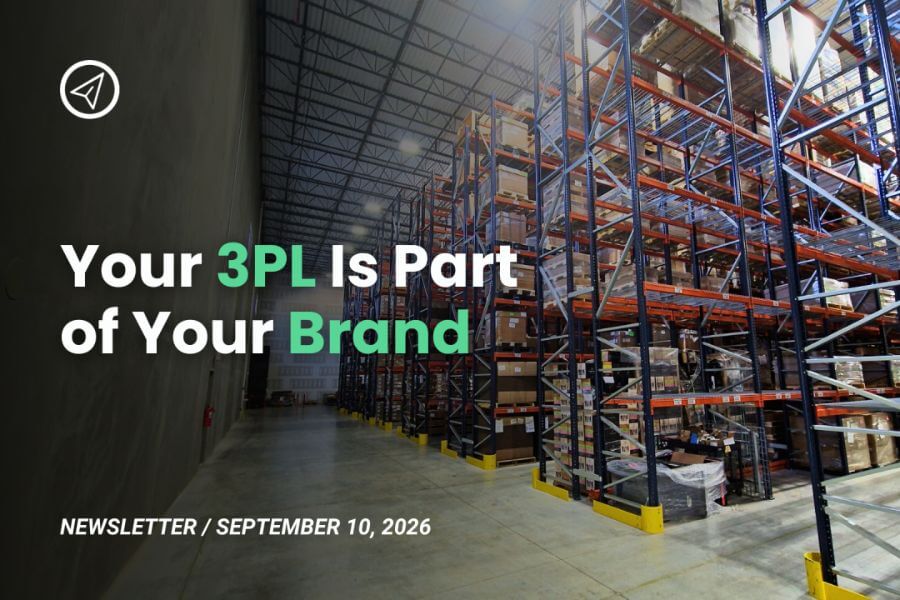
Simple Global operates an 80,000-square-foot fulfillment center in Greater Manchester, providing warehousing, ecommerce fulfillment, retail distribution and returns support for brands serving customers across the UK and Europe.
Treat the UK and European Union as connected but separate markets
One of the most important considerations for international expansion is that the UK and European Union must be approached as separate customs and tax territories.
A warehouse in the UK can provide a strong base for reaching British customers and supporting shipments into European destinations, but brands must still plan carefully for customs declarations, VAT responsibilities, duties and the movement of goods between the UK and EU.
Businesses importing or exporting goods through Great Britain may require a GB EORI number, while an EU EORI number is mandatory for many customs activities within the EU. VAT obligations can also vary depending on where inventory is stored, where the customer is located and whether the sale takes place through a brand’s own website or an online marketplace.
The EU’s One Stop Shop system may simplify VAT reporting for certain cross-border consumer sales by allowing qualifying businesses to register, submit returns and make payments through a single EU portal. However, businesses should obtain professional tax and customs advice based on their particular products, sales channels and distribution model.
The goal is not to eliminate every international requirement. It is to build a fulfillment structure that makes those requirements easier to manage.
Connect every sales channel to one fulfillment system
International growth quickly becomes complicated when orders arrive through several platforms.
A brand might sell through Shopify, Amazon, WooCommerce, eBay, TikTok Shop, wholesale accounts and its own retail website. If each channel maintains separate inventory data, the business risks overselling products, missing orders or replenishing stock too late.
A modern fulfillment partner should connect these channels to one centralized warehouse management system.
Simple Global’s ONE Portal synchronizes inventory, orders, receipts and returns while providing brands with real-time visibility into their fulfillment activity. The company supports more than 30 ecommerce platforms, more than 15 shipping and freight carriers, and API and EDI solutions for more customized requirements.
This means a brand can retain visibility and control without manually coordinating every warehouse task.
Outsource the physical work, not the customer experience
Some businesses hesitate to outsource fulfillment because they fear losing control over their brand.
In reality, the right 3PL should help a company deliver a more consistent customer experience.
An outsourced fulfillment operation can manage:
- Inventory receiving and quality checks
- Secure warehousing
- Picking and packing
- Shipping and carrier coordination
- Retail and wholesale distribution
- Inventory reporting
- Returns inspection and restocking
- Marketplace and ecommerce integrations
Simple Global’s UK operation supports ecommerce orders, B2B and retail distribution, inventory management and reverse logistics from its Greater Manchester facility.
The brand still determines how products are presented, which packaging materials are used and what customers should experience. The 3PL provides the people, systems and physical infrastructure required to deliver that experience consistently.
Build returns into the strategy from the beginning
Returns are often treated as a secondary concern during international expansion. However, they can become one of the most difficult aspects of serving customers in another market.
Without a local returns solution, customers may be expected to ship unwanted products internationally. That can make returns expensive, slow and frustrating.
A regional fulfillment partner can receive returned products, inspect their condition, update inventory records and restock eligible items. Simple Global’s UK reverse-logistics services include returns processing, product inspection, quality checks and inventory restocking support.
A smoother returns process does more than reduce operational pressure. It can also give customers greater confidence when purchasing from an international brand for the first time.
Scale without committing to permanent infrastructure
Opening a warehouse requires a business to commit to property, equipment, recruitment, training, insurance, security, software and carrier relationships before it fully understands the market.
Demand can also fluctuate. A warehouse built for peak season may be unnecessarily expensive during slower periods, while a small facility may quickly become restrictive if sales accelerate.
Working with a 3PL allows a business to use existing infrastructure and scale fulfillment activity in line with actual order volume.
This model can be particularly valuable for brands that are:
- Testing UK or European demand
- Launching after a successful crowdfunding campaign
- Moving from international parcels to local inventory
- Expanding from direct-to-consumer into retail
- Adding Amazon or other marketplace channels
- Experiencing seasonal or promotional order spikes
Instead of spending months building a logistics department, the business can focus its internal resources on product development, marketing, customer acquisition and market strategy.
Expansion should not require reinventing your business
Entering the UK and Europe is a significant step, but it does not need to turn an ecommerce company into a warehouse operator.
With the right fulfillment structure, brands can place inventory closer to customers, connect multiple sales channels, improve delivery speed, process returns locally and retain visibility over the entire operation.
Simple Global provides scalable ecommerce fulfillment through a global network of more than eight locations, including its Greater Manchester facility, with ONE Portal connecting inventory and order activity in one system. Its wider fulfillment network supports brands shipping to more than 180 countries and territories.
The strongest international businesses do not necessarily own the most infrastructure. They build the right partnerships, and use them to enter new markets with greater speed, flexibility and confidence.