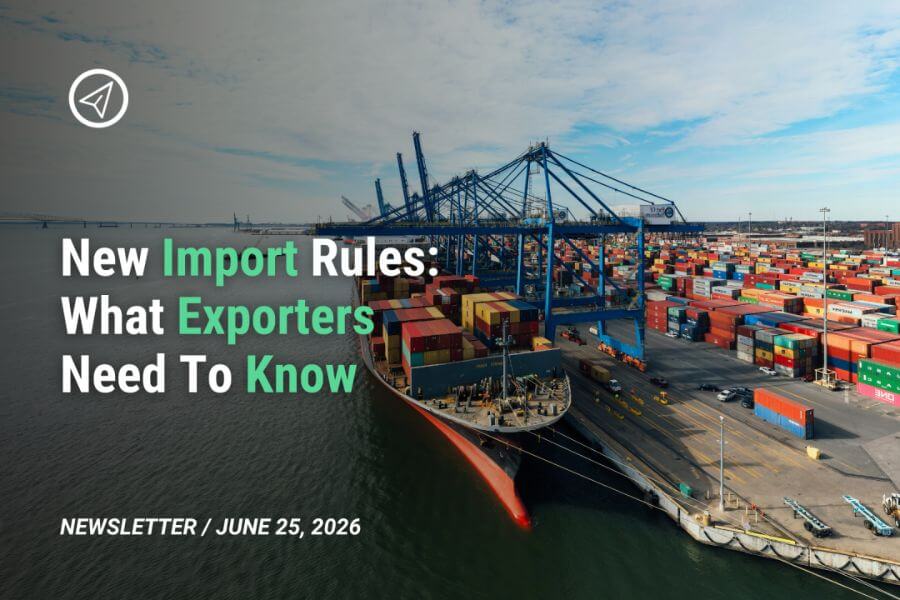
The U.S. import landscape is changing quickly, and exporters selling into the American market should be paying close attention.
For years, many foreign manufacturers, e-commerce sellers, marketplace brands, and cross-border suppliers have been able to ship goods into the United States while acting as Non-Resident Importers. In many cases, these companies could import without having a physical U.S. presence, as long as they obtained the proper customs bond and worked with a licensed U.S. customs broker.
That model is now facing much greater scrutiny.
With the U.S. government moving to strengthen Importer of Record requirements, exporters may soon face higher compliance expectations, increased bonding requirements, expanded ownership disclosures, and more limitations on how foreign entities can act as the Importer of Record.
For exporters, this means one thing: having the right U.S.-based IOR partner is becoming more important than ever.
What Is Changing?
Recent U.S. customs enforcement initiatives are focused on reducing tariff evasion, customs fraud, undervaluation, transshipment violations, and the use of foreign shell companies as Importers of Record.
The Importer of Record is the party legally responsible for ensuring imported goods comply with U.S. customs laws. This includes accurate classification, valuation, duty payment, documentation, and record keeping.
Under the new direction, Importers of Record may be required to provide more detailed information to U.S. Customs and Border Protection, including:
- Ownership and beneficial ownership disclosures
- Business affiliation details
- Anticipated import volumes
- Domestic asset information
- Stronger financial guarantees
- Higher customs bond coverage
- Ongoing proof of compliance and good standing
This creates a much higher bar for companies importing goods into the U.S., especially foreign companies without a clear domestic presence.
Why Exporters Are Most Affected
Foreign exporters that sell directly into the U.S. market may be among the most impacted.
This includes:
- Overseas manufacturers
- Asian e-commerce sellers
- Marketplace sellers
- Cross-border fulfillment companies
- Consolidators
- Brands shipping directly to U.S. customers
- Non-Resident Importers
Many of these businesses have relied on flexible import structures to enter the U.S. market efficiently. However, if eligibility requirements continue to tighten, foreign companies may find it harder to act as their own Importer of Record without additional U.S. infrastructure.
That could mean needing to establish a U.S. entity, maintain a U.S. bank account, secure higher customs bonds, disclose more ownership information, maintain domestic assets, or appoint a reliable domestic compliance partner.
For many exporters, those steps can be time-consuming, expensive, and difficult to manage without local expertise.
Why a U.S.-Based IOR Service Matters
A professional U.S. Importer of Record service can help exporters reduce friction and stay compliant as the regulatory environment becomes more demanding.
Instead of trying to manage complex U.S. customs requirements from overseas, exporters can work with an experienced domestic partner that understands import compliance, documentation, customs coordination, and financial accountability.
A U.S.-based IOR partner can help support:
- Proper importer setup
- Customs documentation review
- Broker coordination
- Duty and tax compliance
- Product entry preparation
- Import recordkeeping
- Risk reduction
- U.S. market entry support
This is especially valuable for companies that want to continue selling into the U.S. without immediately building a full domestic operation.
The New Reality: Compliance Is Becoming a Competitive Advantage
The U.S. market remains one of the most attractive destinations for global exporters, but the cost of getting compliance wrong is increasing.
Delays, rejected entries, higher scrutiny, penalties, bond issues, and documentation problems can disrupt supply chains and damage customer relationships.
Exporters that prepare early will be in a stronger position than those that wait until new requirements are fully enforced.
The businesses that win will not simply be the ones with the lowest prices or fastest shipping. They will be the ones with clean documentation, transparent ownership, reliable customs processes, and accountable U.S. import structures.
What Exporters Should Do Now
Exporters selling into the U.S. should begin reviewing their import model today.
Key questions to ask include:
- Who is currently acting as the Importer of Record?
- Does that party have a meaningful U.S. presence?
- Are customs bonds sufficient for current and future import volumes?
- Are ownership and business affiliation records organized and accurate?
- Is the company prepared for expanded CBP disclosures?
- Is there a reliable U.S.-based partner supporting compliance?
Waiting until enforcement changes are fully implemented may create unnecessary delays and costs.
Final Thought
The direction is clear: U.S. customs enforcement is becoming more transparent, more accountable, and more demanding.
For exporters, this is not just a regulatory issue. It is a business continuity issue.
A reliable U.S. Importer of Record service can help foreign companies continue accessing the American market while reducing compliance risk and simplifying the import process.
As the rules evolve, exporters should not wait until problems appear at the border.
Now is the time to prepare: https://www.simpleglobal.com/