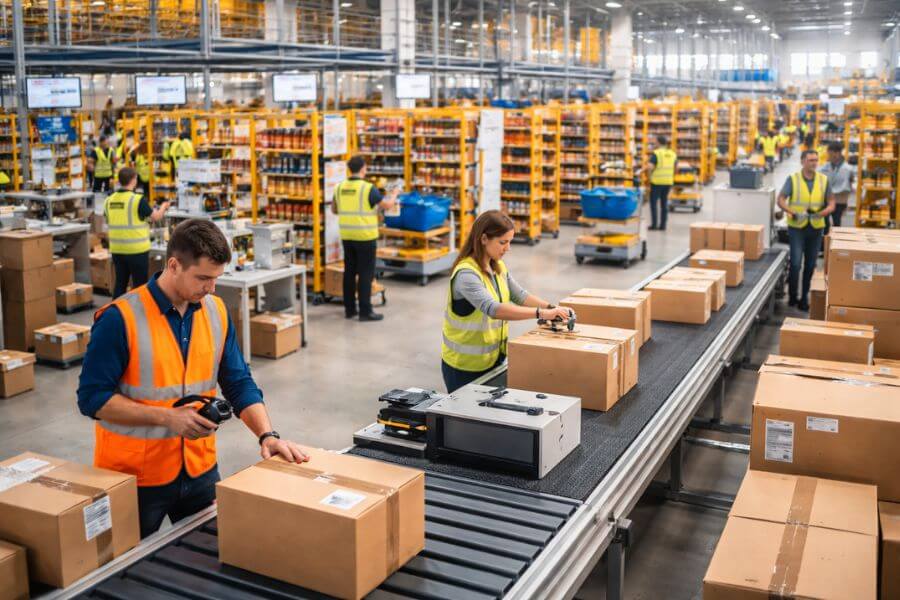
Fast order processing is essential for any ecommerce business that wants to stay competitive. Customers expect quick shipping, accurate deliveries, and real-time updates. A modern fulfillment center plays a major role in meeting those expectations. The right technology, layout, and operational systems can dramatically reduce processing time while improving accuracy. Whether you are a growing online store or an established brand, understanding what makes a fulfillment center efficient can help you choose the right logistics partner. In this guide, we’ll explore ten fulfillment center features that help process orders faster and keep customers satisfied.
1. Advanced Warehouse Management System (WMS)
A powerful warehouse management system is the backbone of fast order processing. A WMS tracks inventory locations, manages picking routes, and automates many warehouse tasks. This reduces manual errors and eliminates time wasted searching for products. When an order arrives, the system instantly assigns it to the correct picking process. Staff receive clear instructions through scanners or mobile devices, allowing them to pick items quickly and accurately. A good WMS also integrates with ecommerce platforms, ensuring that orders are imported in real time and processed without delay.
2. Real-Time Inventory Tracking
Real-time inventory tracking allows fulfillment centers to know exactly where every item is stored at any moment. This eliminates confusion and prevents delays caused by inaccurate stock counts. When inventory levels update instantly after each pick or restock, the system can direct workers to the correct location immediately. Ecommerce businesses also benefit because their stores display accurate stock availability to customers. With fewer stock discrepancies and faster item location, real-time inventory systems help fulfillment teams process orders more efficiently and maintain smooth operations.
3. Efficient Warehouse Layout
The physical layout of a fulfillment center has a major impact on order speed. Products that sell frequently are usually stored closer to packing stations, while slower-moving items are placed further away. Organized zones, wide aisles, and logical product grouping reduce travel time for warehouse staff. When workers spend less time walking across the warehouse, they can complete more orders in less time. A well-designed layout also reduces congestion during peak periods, helping teams maintain consistent order processing even during high-volume sales events.
4. Automated Picking Technology
Automation can significantly accelerate the picking process inside fulfillment centers. Technologies such as pick-to-light systems, barcode scanners, and handheld devices guide workers to the exact item location. These systems reduce mistakes and help employees pick products faster. Some facilities even use robotics to transport items between storage zones and packing stations. By reducing manual searching and repetitive movements, automated picking solutions allow fulfillment centers to handle large order volumes while maintaining high accuracy and speed.
5. Batch and Wave Order Processing
Batch and wave picking strategies help warehouses process multiple orders at the same time. Instead of picking items for each order individually, the system groups orders that contain similar products. Workers pick all required items in one trip and later sort them into individual orders. This method reduces travel time and improves efficiency. Wave processing also allows managers to schedule order picking in organized cycles throughout the day. These techniques help fulfillment centers process orders quickly while keeping workflows structured and predictable.
6. Fast Packing Stations
Well-equipped packing stations can greatly speed up the final step of order processing. Each station typically includes packing materials, shipping labels, scanners, and weighing equipment within easy reach. Workers can quickly verify items, pack products securely, and print shipping labels without leaving their station. Some fulfillment centers also use automated packaging machines that select the right box size and apply labels instantly. Efficient packing stations reduce bottlenecks and ensure that completed orders move quickly from packing to outbound shipping.
7. Integrated Shipping Software
Integrated shipping software connects fulfillment operations directly with shipping carriers. Once an order is packed, the system automatically selects the best shipping option based on cost, delivery speed, and destination. Labels are generated instantly, and tracking numbers are sent to customers. This eliminates manual carrier selection and reduces the risk of delays. Integration also allows fulfillment teams to manage large volumes of shipments efficiently. With streamlined shipping processes, orders leave the warehouse faster, and customers receive their tracking information sooner.
8. Barcode and Scanning Systems
Barcode scanning is one of the simplest yet most effective ways to speed up fulfillment operations. Every product, shelf, and package can be scanned to confirm accuracy during picking, packing, and shipping. This prevents costly mistakes and reduces the need for manual verification. Scanning systems also update the warehouse management system instantly, ensuring inventory accuracy. By automating verification steps, barcode technology helps workers process orders quickly while maintaining a high level of operational accuracy.
9. Skilled and Well-Trained Staff
Even with advanced technology, skilled warehouse staff remain essential for efficient order processing. Well-trained employees understand warehouse systems, picking procedures, and packing standards. Training programs help staff work confidently and reduce errors during busy periods. Experienced teams can also adapt quickly when order volumes increase or unexpected challenges arise. When employees know how to use warehouse technology effectively and follow optimized workflows, fulfillment centers can process orders faster while maintaining consistent service quality.
10. Real-Time Order Monitoring and Analytics
Modern fulfillment centers rely on real-time analytics to track order processing performance. Managers can monitor how quickly orders move through each stage, from picking to packing to shipping. If delays occur, the system highlights bottlenecks so teams can address them immediately. Data insights also help warehouses optimize staffing levels, improve layouts, and adjust workflows during peak demand. With continuous monitoring and performance analysis, fulfillment centers can refine their operations and maintain faster order processing over time.
Conclusion
Fast order processing depends on a combination of smart technology, efficient warehouse design, and skilled staff. Features such as advanced warehouse management systems, real-time inventory tracking, automation, and optimized packing stations all contribute to faster fulfillment operations. When these elements work together, ecommerce businesses can ship orders quickly and accurately. Choosing a fulfillment center with these capabilities can significantly improve customer satisfaction and support long-term growth for online stores that rely on dependable and efficient logistics services.
Frequently Asked Questions
What is a fulfillment center?
A fulfillment center is a warehouse facility that stores inventory, processes orders, packs products, and ships them to customers on behalf of ecommerce businesses. It helps companies manage logistics efficiently so they can focus on marketing, product development, and customer service instead of handling storage and shipping operations.
How does a warehouse management system improve order speed?
A warehouse management system organizes inventory locations, guides workers through picking routes, and automates order processing tasks. By providing clear instructions and real-time data, it reduces searching time, prevents errors, and ensures orders move quickly through each stage of the fulfillment process.
Why is real-time inventory important for fulfillment?
Real-time inventory tracking ensures stock levels are always accurate. This prevents overselling, reduces order delays, and helps warehouse staff locate products immediately. Accurate inventory information allows fulfillment centers to process orders faster and maintain smooth operations even during high-demand periods.
What is batch picking in fulfillment?
Batch picking is a warehouse strategy where workers collect items for multiple orders at the same time instead of picking one order individually. This reduces travel time inside the warehouse and improves overall efficiency, allowing fulfillment centers to process large volumes of orders faster.
How does automation help fulfillment centers?
Automation tools such as barcode scanners, pick-to-light systems, and robotics reduce manual tasks and guide workers through optimized workflows. These technologies increase picking accuracy and speed while minimizing errors. Automation allows fulfillment centers to handle more orders without significantly increasing labor requirements.
What role do packing stations play in order processing?
Packing stations are dedicated areas where orders are checked, packed, and labeled for shipping. Efficient packing stations include all necessary tools and materials within reach, allowing workers to complete orders quickly. Organized stations help prevent bottlenecks and keep fulfillment operations running smoothly.
How does integrated shipping software speed up fulfillment?
Integrated shipping software automatically connects warehouse operations with shipping carriers. It selects the best shipping option, generates labels instantly, and sends tracking numbers to customers. This reduces manual steps and allows orders to move quickly from packing to shipment.
What are barcode systems used for in warehouses?
Barcode systems track products and verify order accuracy throughout the fulfillment process. Workers scan items during picking and packing to confirm they match the order. This technology reduces errors and updates inventory records instantly, helping warehouses maintain both speed and accuracy.
Can small ecommerce businesses benefit from fulfillment centers?
Yes, small ecommerce businesses often benefit greatly from using fulfillment centers. Outsourcing storage and shipping allows them to scale operations without managing warehouses themselves. Professional fulfillment providers offer technology, staff, and logistics expertise that help small businesses process orders efficiently.
What should businesses look for in a fast fulfillment center?
Businesses should look for fulfillment centers that use advanced warehouse management systems, real-time inventory tracking, efficient warehouse layouts, and integrated shipping software. Strong staff training and automation technology are also important indicators that a fulfillment provider can process orders quickly and reliably.