A customer might never know where your inventory is stored, but they will notice when an order takes too long to arrive, shipping costs feel too high, or the product they want suddenly goes out of stock. That’s why growing ecommerce brands are increasingly looking beyond the traditional single-warehouse model and embracing distributed inventory.
Instead of keeping the majority of your products in one fulfillment center and shipping every order from the same location, distributed inventory places stock across strategically located fulfillment centers closer to where customers are actually buying.
It sounds simple. But done correctly, it can completely change the efficiency of your fulfillment operation.
What Is Distributed Inventory?
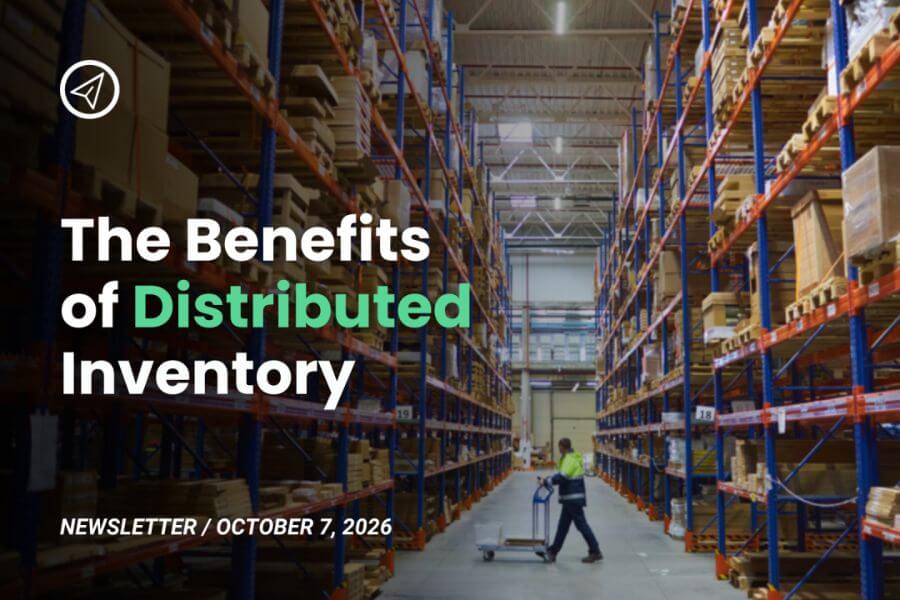
Distributed inventory is the practice of dividing stock between multiple warehouses or fulfillment centers rather than relying on one central location. Imagine an ecommerce brand selling across the United States, UK, Europe and Asia.
If every order is shipped from one warehouse, customers thousands of miles away may face longer transit times, higher shipping costs and, for international orders, additional cross-border complexity. With a distributed model, inventory can instead be positioned nearer major areas of demand.
An order from California can potentially be fulfilled from the West Coast. A UK customer can be served from inventory already positioned in the UK. Growing demand across Asia can be supported from an Asian fulfillment operation.
The result is a supply chain designed around where your customers are — not simply where your first warehouse happens to be.
Faster Delivery Starts Before the Order Is Placed
Brands often focus on finding faster carriers when trying to improve delivery speed, but sometimes the biggest opportunity comes much earlier. If a package has less distance to travel, you can reduce its journey before a carrier even collects it.
Strategically distributing inventory can shorten shipping distances to important markets, reducing transit times and creating more opportunities for brands to provide the fast delivery experience modern ecommerce customers increasingly expect.
Simple Global operates a network of 8+ global fulfillment and warehouse locations, allowing growing brands to position inventory closer to customers while supporting fulfillment across more than 180 countries and territories.
Fewer Shipping Zones Can Mean Smarter Shipping Costs
Long-distance fulfillment doesn’t only affect speed; it affects cost. When every domestic order travels across multiple shipping zones — or every international order begins with a cross-border journey — transportation expenses can quickly become a major part of the fulfillment equation.
Distributed inventory gives businesses the opportunity to fulfill more orders regionally.
That can mean shorter journeys, fewer shipping zones and a more efficient delivery network.
Build Resilience Into Your Fulfillment Network
There is another benefit that becomes especially important as a business grows: resilience.
A supply chain heavily dependent on one fulfillment location creates a natural point of vulnerability.
Severe weather, regional carrier disruption, warehouse constraints or sudden spikes in demand can create problems that quickly spread across the entire operation.
Distributed inventory provides more flexibility.
If stock is positioned across multiple regions, brands have more options for managing changing demand and reducing their dependence on one location.
That becomes particularly valuable during seasonal peaks, when ecommerce volumes increase and carrier networks become more congested. Simple Global notes that multi-node fulfillment can help brands position inventory around expected demand, reduce last-mile delivery distances and react more effectively to unexpected changes.
Distribution Without Visibility Creates Another Problem
Of course, adding warehouses isn’t automatically an improvement.
Inventory distributed badly can create its own challenges.
Place too much stock in one location and products may sit untouched. Send too little to a high-demand region and you could still experience stockouts. Spread inventory too widely without reliable technology and suddenly understanding exactly what you have — and where you have it — becomes difficult.
That’s why visibility is just as important as location.
Brands need to understand inventory levels across their fulfillment network and use real sales data to determine where products should be positioned.
Simple Global combines multi-location distribution with real-time inventory visibility, helping brands manage stock across their fulfillment operation instead of creating disconnected inventory silos.
The goal isn’t to put every SKU everywhere.
It’s to put the right inventory in the right locations based on actual demand.
Distributed Inventory Can Make Global Expansion Less Intimidating
Entering a new market traditionally creates a difficult logistics decision.
Do you continue shipping internationally from your existing warehouse?
Do you establish a local warehouse?
Do you build relationships with multiple regional logistics providers?
For growing ecommerce businesses, each option introduces cost and operational complexity.
A global 3PL network offers another path.
Rather than building fulfillment infrastructure market by market, brands can use strategically located facilities to move inventory closer to growing customer bases while maintaining a more connected logistics operation.
Simple Global’s fulfillment network spans locations across the United States, UK, Asia and Australia, helping ecommerce brands build regional fulfillment strategies without having to establish every logistics operation themselves.
Your Inventory Should Move With Your Customers
Distributed is about making smarter decisions about where inventory lives, as your customer base expands. The right distribution strategy can help reduce the distance between your products and your customers, improve delivery times, control shipping costs and create a supply chain that is better prepared for growth.
And as ecommerce becomes increasingly global, the brands with the smartest fulfillment networks may have an important advantage: They’re already closer to the customer.