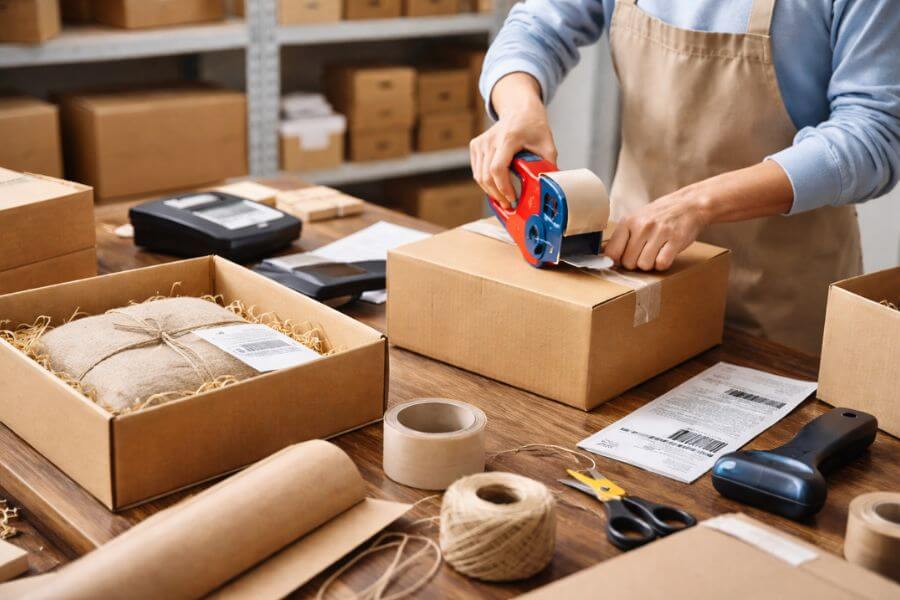
If you run an ecommerce business or sell products online, you eventually face an important decision. Should you handle your own order fulfillment or outsource it to a third party? Self-fulfillment, also known as in-house fulfillment, means you store inventory, pack orders, and ship products yourself instead of using a fulfillment provider. For many businesses, especially small and growing brands, this approach offers control, flexibility, and cost savings.
Understanding how self-fulfillment works helps you decide if it is the right strategy for your business. While it can save money and give you more control over your operations, it also requires time, organization, and the right systems. In this guide, you will learn how self-fulfillment works, its advantages and challenges, and how to set up an efficient process that supports your growth.
What is Self-Fulfillment?
Self-fulfillment means you manage the entire order fulfillment process yourself. Instead of sending your inventory to a warehouse or fulfillment company, you store your products at your own location, such as your home, office, or warehouse. When a customer places an order, you pick the items, pack them, and ship them directly.
This method is common among startups, small ecommerce stores, and businesses that want full control over their operations. It also works well if you sell a limited number of products or have lower order volumes.
A typical self-fulfillment process includes:
- Receiving and storing inventory
- Managing stock levels
- Picking ordered items
- Packing products securely
- Printing shipping labels
- Shipping orders to customers
- Handling returns and exchanges
How Self-Fulfillment Works Step by Step
To understand if self-fulfillment is right for you, it helps to understand the typical workflow. While every business may have small differences, the basic process usually follows the same structure.
Step 1: Inventory storage
You receive products from suppliers and organize them in a storage space. This could be shelves, bins, or storage racks. Keeping products organized makes picking faster and reduces mistakes.
Step 2: Order management
When a customer places an order on your website or marketplace, you receive the order details through your ecommerce platform or order management system.
Step 3: Picking products
You locate the ordered items in your storage area and prepare them for packing. Organized storage helps reduce picking time.
Step 4: Packing orders
You pack products using boxes, mailers, bubble wrap, or other protective materials. Proper packing helps prevent damage during shipping.
Step 5: Shipping
You print shipping labels and hand packages to your chosen carrier. Many businesses schedule pickups or drop off packages daily.
Step 6: Returns management
If customers return products, you inspect them and decide whether to restock, repair, or discard them.
Benefits of Self-Fulfillment
Self-fulfillment offers several advantages, especially for businesses that want more control over their operations and customer experience.
1. Full control over your process
You control how products are handled, packed, and shipped. This allows you to maintain quality standards and create a better unboxing experience.
2. Lower fulfillment costs at low volume
If your order volume is still manageable, self-fulfillment may cost less than outsourcing. You avoid storage fees, pick fees, and service charges.
3. Flexibility
You can quickly adjust processes, change packaging, or test new shipping methods without relying on a third party.
4. Better inventory visibility
Since your products are physically with you, it is easier to track inventory and spot problems early.
5. Personal touch
Many businesses like adding handwritten notes, branded packaging, or small gifts. Self-fulfillment makes this easier.
Challenges of Self-Fulfillment
While self-fulfillment has advantages, it also comes with challenges that you should consider before committing to this approach.
1. Time-consuming
Packing and shipping orders takes time. As your business grows, this can take focus away from marketing, product development, and customer service.
2. Space limitations
Inventory takes space. As your product range grows, you may need more storage space than you expected.
3. Shipping complexity
Managing multiple carriers, shipping rates, and delivery timelines can become complicated as order volume increases.
4. Scaling difficulties
Self-fulfillment works well at a small scale, but handling hundreds of daily orders can become difficult without automation or staff.
5. Risk of errors
Without proper systems, mistakes such as wrong items or incorrect addresses can happen more often.
Who Should Consider Self-Fulfillment
Self-fulfillment is not for every business, but it can be a great option in certain situations.
You may benefit from self-fulfillment if:
- You are a startup with limited order volume
- You want to save costs during early growth stages
- You sell handmade or customized products
- You want full control over packaging and branding
- You want to test your business before outsourcing
- You have enough time to manage logistics
On the other hand, if you ship large volumes daily or want faster global shipping, outsourcing fulfillment may eventually make more sense.
How to Make Self-Fulfillment More Efficient
If you choose self-fulfillment, setting up efficient systems early can save you time and reduce errors.
Organize your storage
Create a clear system so you can find products quickly. Consider:
- Labeling shelves clearly
- Grouping similar products together
- Using SKU codes
- Keeping fast-selling items easily accessible
Use shipping software
Shipping tools can help you compare rates, print labels, and track orders. This saves time and reduces manual work.
Standardize packing
Create a simple packing process:
- Use standard box sizes
- Prepare packing stations
- Keep supplies within reach
- Create a packing checklist
Track inventory regularly
Perform regular inventory checks to avoid overselling or running out of stock unexpectedly.
Create a daily routine
Set specific times for:
- Order processing
- Packing
- Shipping drop-offs
- Inventory updates
Consistency improves efficiency and reduces stress.
When to Transition Away From Self-Fulfillment
Many businesses start with self-fulfillment but eventually move to outsourced fulfillment. Knowing when to make that change is important.
You may want to consider switching if:
- You spend most of your day packing orders
- You run out of storage space
- Your shipping volume increases quickly
- You want faster delivery options
- You plan to expand internationally
- Fulfillment tasks prevent business growth
Self-fulfillment is often a starting point, not a permanent solution. As your business grows, your fulfillment strategy should evolve.
Common Mistakes to Avoid
Many businesses struggle with self-fulfillment because they overlook simple operational improvements.
Avoid these common mistakes:
- Poor inventory organization
- Not tracking stock levels
- Using too many packaging sizes
- Choosing carriers without comparing rates
- Delaying order processing
- Not planning for growth
Small improvements in organization and workflow can make a big difference in efficiency.
Conclusion
Self-fulfillment can be a smart and practical choice, especially when you are starting or managing a growing ecommerce business. It gives you control over your operations, helps you manage costs, and allows you to build a strong connection with your customers through careful packaging and service. At the same time, it requires discipline, organization, and time management to do it well.
The key to success with self-fulfillment is building simple and repeatable processes. When your systems are organized and efficient, you can handle orders smoothly while still focusing on growing your business. As your order volume increases, you can always reevaluate whether self-fulfillment still fits your needs. By understanding both the benefits and the limits, you can make smarter decisions that support your long-term ecommerce success.
Frequently Asked Questions
Is self-fulfillment cheaper than using a fulfillment company?
It depends on your order volume. For small businesses with fewer orders, self-fulfillment is often cheaper because you avoid service fees. However, as volume increases, outsourcing may become more cost-effective due to shipping discounts and operational efficiency.
Do I need special equipment for self-fulfillment?
You can start with basic supplies such as boxes, tape, and a printer. As you grow, you may invest in shelving, barcode scanners, label printers, and packing tables to improve efficiency and reduce errors.
How much space do I need for self-fulfillment?
This depends on your product size and inventory levels. Some businesses start from a small room or garage. As inventory grows, you may need dedicated storage space or a small warehouse.
Can self-fulfillment work for international shipping?
Yes, but it requires more planning. You must understand customs forms, international shipping costs, and delivery timelines. Many businesses handle domestic orders themselves and outsource international fulfillment later.
How do I know if I am ready to outsource fulfillment?
You may be ready when fulfillment tasks take too much of your time, errors increase, or you cannot keep up with demand. If logistics slow your growth, outsourcing may help you scale more efficiently.