Ecommerce continues to evolve rapidly in 2026, driven by AI innovation, changing consumer behaviors, and operational efficiency. Retailers embracing emerging trends can stay ahead in global competition while enhancing customer experiences. From agentic AI assistants to immersive AR shopping, these trends redefine how consumers discover, buy, and interact with products. Here are the top 10 ecommerce trends shaping the industry this year.
1. Agentic AI Shopping Assistants
AI shopping assistants are replacing traditional chatbots by autonomously browsing, comparing, and purchasing products on behalf of users. These systems handle complex tasks like grocery reordering, vacation planning, and multi-step product searches, integrating with third-party services for seamless execution. Retailers optimizing for AI decision-making benefit from faster conversions and higher customer satisfaction. Brands leveraging agentic AI can offer proactive, time-saving shopping experiences that anticipate needs rather than react, positioning themselves as leaders in the next generation of personalized ecommerce.
2. Hyper-Personalization in Real Time
AI-driven hyper-personalization now goes beyond recommendations, predicting customer intent across devices, channels, and languages. Shoppers experience dynamically tailored journeys, with offers, upsells, and product suggestions adapting instantly to context. Retailers leveraging this trend see higher conversions as personalization becomes omnichannel and responsive, integrating mobile, voice, chat, and web. From multi-device recommendations to predictive messaging, hyper-personalization creates a shopping experience that feels individual, anticipatory, and relevant, making it a critical strategy for brands aiming to deepen engagement and loyalty in an increasingly competitive ecommerce landscape.
3. Social Commerce Mainstream Adoption
Social media platforms are transforming into fully functional sales channels. From Instagram shops to WhatsApp commerce, brands now create micro-stores within social apps, blending discovery and purchase without leaving the platform. Virtual influencers and AI-driven content accelerate impulse buys, while integrated payment and chat systems simplify transactions. This mainstream adoption allows brands to meet customers where they spend the most time, fostering immediate engagement and social-driven conversion. By leveraging social commerce, businesses can tap into a seamless, interactive buying experience that connects content, community, and commerce in one ecosystem.
4. Voice and Conversational Commerce
Voice commerce is gaining traction as consumers use smart speakers, mobile assistants, and AI agents for searches, orders, and reorders. Hands-free, conversational interfaces make purchasing natural and effortless, particularly for mobile-first and on-the-go shoppers. AI agents enhance these interactions by understanding context and intent, recommending relevant products, and completing transactions. Retailers investing in voice-optimized platforms capture a growing segment of convenience-driven buyers, integrating voice into broader omnichannel strategies. By embracing conversational commerce, businesses can provide faster, intuitive shopping experiences that align with evolving customer habits and emerging technology trends.
5. Sustainability and Digital Passports
Consumers increasingly demand transparency and accountability in product sourcing and environmental impact. Digital product passports provide supply chain tracking, carbon footprint information, and material sourcing details at checkout, enabling shoppers to make informed, eco-conscious decisions. Brands highlighting sustainability practices from logistics to packaging build trust and loyalty while differentiating themselves in competitive markets. Implementing these digital passports not only meets regulatory and consumer expectations but also positions retailers as responsible, forward-thinking leaders. Sustainability-focused ecommerce is no longer optional; it’s a strategic advantage for attracting conscious shoppers and fostering long-term brand equity.
6. Omnichannel and Micro-Fulfillment
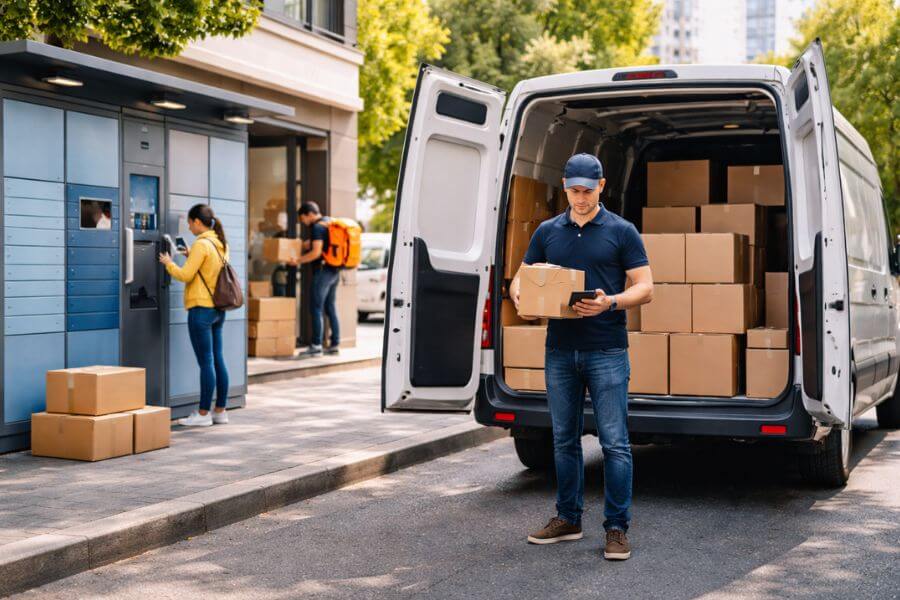
The rise of micro-fulfillment centers enables ultra-fast delivery, blending online orders, in-store pickup, and hyper-local logistics. Urban hubs, drones, and AI-driven inventory management reduce delivery times to hours while maintaining accuracy. This trend supports seamless omnichannel experiences, allowing customers to choose how, where, and when they receive products. Retailers optimizing micro-fulfillment gain a competitive edge by minimizing stockouts, lowering operational costs, and meeting modern expectations for convenience. Combining AI forecasting with localized fulfillment, brands can deliver faster, smarter, and more flexible shopping journeys in 2026.
7. Composable and API-First Architectures
Traditional monolithic ecommerce platforms are being replaced by composable, API-first architectures. Retailers can mix and match tools for marketing, payments, inventory, and fulfillment without vendor lock-in. This flexibility allows businesses to quickly adopt new technologies, respond to market trends, and customize customer experiences. API-driven stacks support rapid experimentation, integration with emerging services, and scalability without compromising operational efficiency. Brands embracing composable architecture gain agility, resilience, and innovation potential, enabling them to deliver modern, adaptable ecommerce solutions while staying ahead of competitors in a fast-evolving digital marketplace.
8. Loyalty as a Data Strategy
Modern loyalty programs go beyond rewards, functioning as data engines for retention and engagement. By leveraging user-generated content, verified reviews, and behavioral analytics, brands can personalize offers and incentives at scale. AI optimizes rewards, emphasizing owned channels over generic advertising and creating highly targeted, relevant experiences. Loyalty programs now strengthen relationships, foster advocacy, and generate actionable insights for smarter marketing. In 2026, businesses integrating data-driven loyalty into their ecommerce strategy gain a sustainable advantage, turning repeat customers into brand ambassadors and maximizing long-term customer lifetime value.
9. Augmented Reality and Immersive Experiences
AR and immersive technologies enhance online shopping by simulating real-world interactions with products. Virtual try-ons, AR store previews, and interactive demos bridge the gap between physical and digital retail, increasing engagement and conversion rates. Shoppers can visualize items in their environment, reducing uncertainty and returns. Brands leveraging AR differentiate themselves through experiential marketing, improving satisfaction and brand perception. As technology adoption grows, immersive ecommerce experiences will become standard, offering customers visually engaging, interactive, and confidence-building ways to explore, evaluate, and purchase products online.
10. Operational AI Efficiency
AI is transforming back-end operations, optimizing demand forecasting, inventory management, and order routing. By handling volatility and unpredictability faster than humans, AI enables scalable growth, reduces errors, and improves operational efficiency. Enterprises can respond in real time to supply chain disruptions, seasonal spikes, or sudden demand shifts. Automation of repetitive tasks frees teams to focus on strategic initiatives, enhancing overall performance. Retailers investing in operational AI gain cost efficiency, speed, and resilience, creating a foundation for sustainable growth while maintaining high service levels in increasingly competitive ecommerce markets.
Conclusion
The ecommerce landscape in 2026 is defined by AI-driven personalization, immersive experiences, sustainability, and operational agility. Retailers adopting these trends gain competitive advantage, improved customer loyalty, and faster growth. From agentic AI assistants to micro-fulfillment and AR shopping, businesses that integrate technology strategically and prioritize transparency will thrive. Staying ahead means embracing innovation across front-end experiences and back-end operations, ensuring every touchpoint meets evolving customer expectations. By monitoring and leveraging these top 10 trends, brands can position themselves for long-term success in an increasingly digital, interconnected, and experience-driven ecommerce world.