In ecommerce, growth is rarely limited by the ability to generate orders. More often, it is limited by the systems responsible for processing them.
As businesses expand across multiple sales channels, marketplaces, and international markets, fulfillment operations become increasingly complex. Orders arrive from different platforms, inventory must remain accurate across locations, and shipping information needs to move seamlessly between systems.
Without the right technology infrastructure, these processes quickly become fragmented, introducing delays, inventory discrepancies, and unnecessary operational costs.
This is why ecommerce integrations are no longer simply a convenience. They are an essential component of scalable fulfillment.
The Hidden Complexity of Multichannel Ecommerce
Consider a growing ecommerce brand selling through Shopify, Amazon, Walmart, and TikTok Shop.
Each platform creates its own stream of orders, inventory updates, and customer expectations. When these systems operate independently, businesses often rely on manual processes or disconnected software to coordinate fulfillment.
The result can be a combination of operational challenges:
- Inventory discrepancies between sales channels.
- Delayed order processing and fulfillment.
- Increased administrative workloads.
- Overselling and stock availability issues.
- Limited visibility into shipping and delivery performance.
These challenges become more pronounced as order volumes increase.
What works for a business processing 50 orders per day may be entirely unsuitable when that same business begins processing 5,000.
The solution isn’t necessarily adding more employees or software. It’s ensuring the technology already in place can communicate effectively.
One Connected Fulfillment Ecosystem
A connected fulfillment operation brings ecommerce platforms, marketplaces, inventory management, shipping carriers, and business systems together.
Instead of managing each component independently, businesses can automate the flow of information across their logistics network.
At Simple Global, our integration ecosystem supports 48+ integration partners, including 30+ ecommerce platforms and sales channels, 15+ shipping integrations, and flexible API and EDI connectivity.
This infrastructure is designed to connect the technology businesses already use with the fulfillment processes responsible for delivering their products.
Whether a business operates through Shopify, WooCommerce, BigCommerce, Amazon, Walmart, or TikTok Shop, connected fulfillment helps create a more consistent operational workflow.
An order placed through an online store can move directly into the fulfillment process, inventory information can be synchronized, and shipping updates can flow back through connected systems.
This reduces the need for repetitive manual intervention while helping businesses maintain greater operational control.
Automation Begins Before an Order Reaches the Warehouse
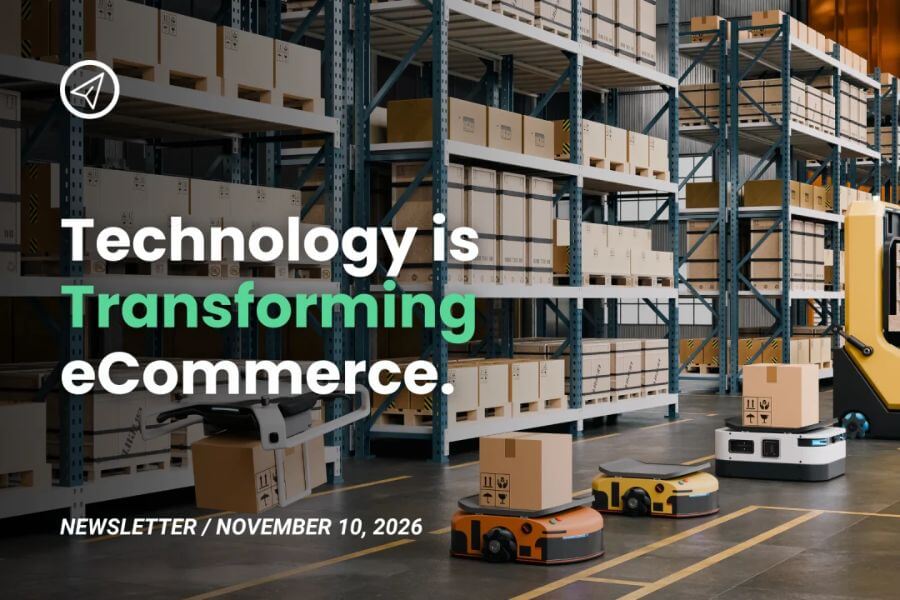
Fulfillment automation is often associated with warehouse robotics, conveyor systems, and automated picking technologies.
However, some of the most valuable automation happens before a warehouse employee even receives an order.
When ecommerce systems are connected, businesses can streamline several critical processes.
Automated order processing
Orders can be transferred directly from sales channels into fulfillment workflows, eliminating the need for repeated manual data entry and reducing the possibility of processing errors.
Inventory synchronization
Inventory information can be updated across connected sales platforms, helping businesses maintain more accurate stock availability and reduce overselling risks.
Shipping coordination
Integrated shipping technology helps streamline carrier selection, label generation, tracking updates, and delivery management.
Centralized operational visibility
Rather than switching between multiple disconnected platforms, businesses can manage fulfillment information through a more unified technology environment.
Together, these capabilities create a foundation for faster, more accurate, and more scalable operations.
Shipping Integrations: Connecting Fulfillment to the Final Mile
Order processing is only one part of the ecommerce experience.
Once an order leaves the warehouse, the relationship between fulfillment technology and shipping carriers becomes equally important.
Businesses need to balance shipping costs, delivery expectations, carrier availability, and geographic coverage.
Simple Global’s shipping integration ecosystem includes major carriers such as DHL, UPS, and FedEx, alongside shipping technology providers including EasyPost, ShipStation, Easyship, and Shippo.
Connecting fulfillment workflows with carrier technology helps businesses streamline shipping operations and improve the flow of tracking and delivery information.
For brands selling internationally, this connectivity becomes particularly valuable.
Different destinations, shipping services, and delivery requirements introduce additional layers of complexity. An integrated technology environment helps businesses manage these variables without relying on entirely separate processes for every sales channel or market.
Beyond Ecommerce Platforms: The Importance of API and EDI
Not every business operates through a conventional online storefront.
As companies expand into wholesale distribution, retail partnerships, and business-to-business fulfillment, their technology requirements become more sophisticated.
This is where API and EDI connectivity become especially important.
Application Programming Interfaces (APIs) enable different software systems to exchange information, supporting customized workflows between ecommerce platforms, inventory systems, and fulfillment operations.
Electronic Data Interchange (EDI) enables the structured exchange of business documents between trading partners, supporting processes such as purchase orders, invoices, and shipping notifications.
For businesses working with larger retailers, distributors, or enterprise customers, these capabilities can be essential for maintaining efficient and compliant supply chain operations.
Simple Global supports API connectivity alongside EDI solutions involving providers such as SPS Commerce and TrueCommerce.
This flexibility allows businesses to connect fulfillment operations with a broader technology stack, rather than forcing every company into the same operating model.
Why Integration Flexibility Matters as Businesses Grow
One of the biggest mistakes growing ecommerce businesses can make is building their entire fulfillment strategy around their current operational requirements.
A business may begin with a single Shopify store before expanding to Amazon, launching on TikTok Shop, introducing wholesale partnerships, or entering international markets.
Each new sales channel brings additional data, workflows, and operational demands.
If the fulfillment infrastructure cannot accommodate those changes, expansion becomes increasingly difficult.
Integration flexibility enables businesses to introduce new sales channels and systems without rebuilding their fulfillment processes from the ground up.
It also makes it easier to adapt to changing customer expectations, emerging marketplaces, and evolving distribution strategies.
The objective is simple: build a fulfillment operation that can grow alongside the business, rather than becoming an obstacle to its expansion.
The Future of Fulfillment Is Connected
The next stage of ecommerce growth will not be defined solely by faster delivery or larger warehouse networks.
It will also depend on how effectively businesses connect the technology behind their operations.
Orders, inventory, warehouse processes, shipping carriers, and enterprise systems must work together to support an increasingly complex commercial environment.
For ecommerce brands, this means looking beyond individual software platforms and considering the wider technology ecosystem supporting their supply chain.
At Simple Global, we believe fulfillment should simplify growth, not create additional complexity.
With a connected ecosystem of ecommerce platforms, shipping technologies, and API and EDI solutions, we help businesses streamline operations, improve visibility, and build the infrastructure needed to scale.
Because successful ecommerce fulfillment isn’t just about moving products from one place to another.
It’s about ensuring every system behind that journey works together.
Explore Simple Global’s ecommerce integrations and discover how connected fulfillment can support your business.