Lean manufacturing is no longer limited to factory floors. Today, it plays a major role in logistics operations, helping businesses reduce waste, improve efficiency, and deliver better customer experiences. Whether you manage a warehouse, run an ecommerce fulfillment operation, or oversee transportation processes, lean principles can help you work smarter instead of harder.
At its core, lean manufacturing in logistics focuses on removing activities that do not add value. This means improving workflows, reducing delays, minimizing errors, and making better use of resources. When done correctly, lean logistics can lower costs, improve delivery speed, and increase customer satisfaction.
In this guide, you will learn how lean manufacturing applies to logistics, why it matters, the key principles involved, and how you can start using it in your own operations.
What Is Lean Manufacturing in Logistics?
Lean manufacturing in logistics is the practice of improving supply chain and warehouse processes by eliminating waste and focusing only on activities that create value for customers. The idea comes from the Toyota Production System, which focused on efficiency, quality, and continuous improvement.
In logistics, lean thinking applies to areas such as:
- Warehouse operations
- Inventory management
- Order fulfillment
- Transportation planning
- Packaging processes
- Returns management
The goal is simple. You want to move products faster, reduce mistakes, and avoid wasting time, space, and money.
Why Lean Logistics Matters
Modern supply chains are complex and highly competitive. Customers expect fast shipping, accurate orders, and clear tracking updates. If your logistics processes are inefficient, you may face delays, higher costs, and unhappy customers.
Lean logistics helps solve these challenges by creating smoother operations. Some of the biggest benefits include:
- Lower operating costs through waste reduction
- Faster order processing and shipping times
- Better inventory control
- Improved employee productivity
- Fewer errors and returns
- Higher customer satisfaction
For logistics providers and ecommerce fulfillment companies, lean practices can also create a strong competitive advantage.
The 8 Types of Waste in Logistics
Lean manufacturing identifies eight types of waste that reduce efficiency. Understanding these wastes can help you identify problems in your logistics operations.
- Overproduction: Producing or ordering more inventory than needed
- Waiting: Idle time caused by delays, bottlenecks, or slow processes
- Transportation: Unnecessary movement of goods between locations
- Overprocessing: Doing more work than required to complete a task
- Inventory: Excess stock that increases storage costs
- Motion: Unnecessary movement by workers due to poor layout
- Defects: Errors that lead to returns or rework
- Unused talent: Not using employee skills effectively
By identifying these waste areas, you can begin making improvements that lead to more efficient logistics operations.
Key Lean Principles Used in Logistics
Lean logistics is guided by several important principles. These ideas help you focus on what truly matters in your operations.
1. Define Value
Value is defined by what your customer cares about. In logistics, this usually means fast delivery, accurate orders, and safe packaging. Any activity that does not support these goals should be reviewed.
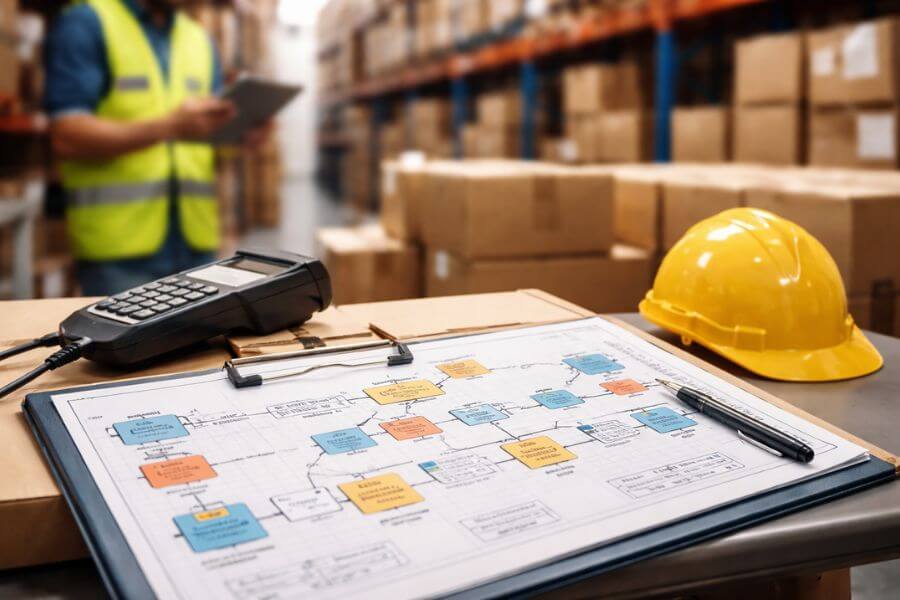
2. Map the Value Stream
This means documenting every step in your logistics process, from receiving inventory to final delivery. By mapping the process, you can identify delays, duplicate steps, and inefficiencies.
3. Create Flow
Once waste is removed, your next goal is to make processes flow smoothly. This may involve reorganizing warehouse layouts, improving picking routes, or automating repetitive tasks.
4. Establish Pull Systems
Pull systems focus on demand instead of forecasts. Instead of storing excess inventory, products are replenished based on actual orders. This helps reduce storage costs and inventory risks.
5. Continuous Improvement
Lean is not a one-time project. It is an ongoing effort to improve processes. Small improvements made regularly often lead to major long-term gains.
Common Lean Tools Used in Logistics
Several tools help companies apply lean principles in logistics. These tools help you organize work, reduce waste, and improve performance.
- 5S Method: Sort, Set in order, Shine, Standardize, and Sustain workplace organization
- Kaizen: Continuous small improvements made by employees
- Kanban: Visual systems that control inventory and workflow
- Value Stream Mapping: Visual diagrams showing process steps
- Standard Work: Documented best practices for tasks
- Root Cause Analysis: Identifying the true source of problems
These tools are often simple to start but can create major improvements when used consistently.
How Lean Improves Warehouse Operations
Warehouses are one of the biggest areas where lean practices can make an impact. Many inefficiencies come from poor layouts, unclear processes, and manual errors.
Lean improvements in warehouses often include:
- Optimizing picking paths to reduce walking time
- Organizing fast-moving products near packing stations
- Using clear labeling systems
- Reducing unnecessary handling of products
- Implementing barcode scanning to reduce errors
- Improving workstation design for efficiency
Even small changes, such as reorganizing shelves, can significantly improve productivity.
How Lean Supports Transportation Efficiency
Transportation is another major cost area in logistics. Lean thinking helps improve delivery efficiency while reducing costs.
Some common lean transportation improvements include:
- Route optimization to reduce travel distance
- Better load planning to maximize truck space
- Reducing empty return trips
- Improving delivery scheduling
- Using real-time tracking data
These improvements not only reduce costs but also help meet delivery expectations.
Challenges of Implementing Lean Logistics
While lean logistics offers many benefits, implementation can come with challenges. Understanding these obstacles helps you prepare for success.
Common challenges include:
- Resistance to change from employees
- Lack of training or understanding
- Poor communication between teams
- Short-term focus instead of long-term improvement
- Limited data visibility
To overcome these challenges, you should focus on training, clear communication, and leadership support. When employees understand the benefits, they are more likely to support improvements.
How to Start Implementing Lean in Logistics
If you want to start using lean logistics, you do not need to change everything at once. Many companies begin with small improvements and expand over time.
You can start with these simple steps:
- Identify your biggest inefficiencies
- Measure current performance
- Start with one improvement project
- Train your team on lean basics
- Track results and improvements
- Encourage employee feedback
Starting small helps you build momentum and demonstrate results quickly.
The Future of Lean Logistics
Technology is making lean logistics even more powerful. Automation, artificial intelligence, and data analytics are helping companies identify waste faster and improve decision-making.
Some trends shaping the future of lean logistics include:
- Warehouse automation systems
- AI-powered demand forecasting
- Robotics for picking operations
- Real-time inventory tracking
- Digital twins for process simulation
Companies that combine lean principles with technology often see the best results.
Conclusion
Lean manufacturing in logistics is about working efficiently, reducing waste, and continuously improving your processes. By focusing on value, improving workflows, and eliminating unnecessary steps, you can build faster and more reliable logistics operations.
You do not need a massive transformation to see results. Small improvements such as better organization, improved picking routes, or clearer processes can create meaningful gains. Over time, these improvements can lead to lower costs, faster delivery times, and better customer satisfaction.
If you treat lean as an ongoing mindset instead of a one-time project, you can build a logistics operation that stays competitive and efficient for years to come.
Frequently Asked Questions
Is lean logistics only useful for large companies?
No. Lean logistics can benefit businesses of all sizes. Small companies often see fast improvements because they can implement changes more quickly. Even simple improvements such as better organization or clearer workflows can make a big difference.
How long does it take to see results from lean logistics?
Some improvements can show results within weeks, especially if you focus on quick wins like workspace organization or process improvements. Larger changes, such as system upgrades, may take several months to show full results.
Does lean logistics require expensive technology?
No. While technology can help, many lean improvements focus on process changes rather than software. Better workflows, employee training, and improved layouts often provide strong returns without major investment.
How do you measure lean logistics success?
You can measure success using key performance indicators such as order accuracy, fulfillment speed, inventory turnover, shipping costs, and error rates. Tracking these metrics helps you see the impact of your improvements.
What is the difference between lean logistics and just-in-time logistics?
Lean logistics is a broader strategy focused on waste reduction and efficiency. Just-in-time is one method used within lean practices that focuses on reducing inventory by receiving goods only when needed.