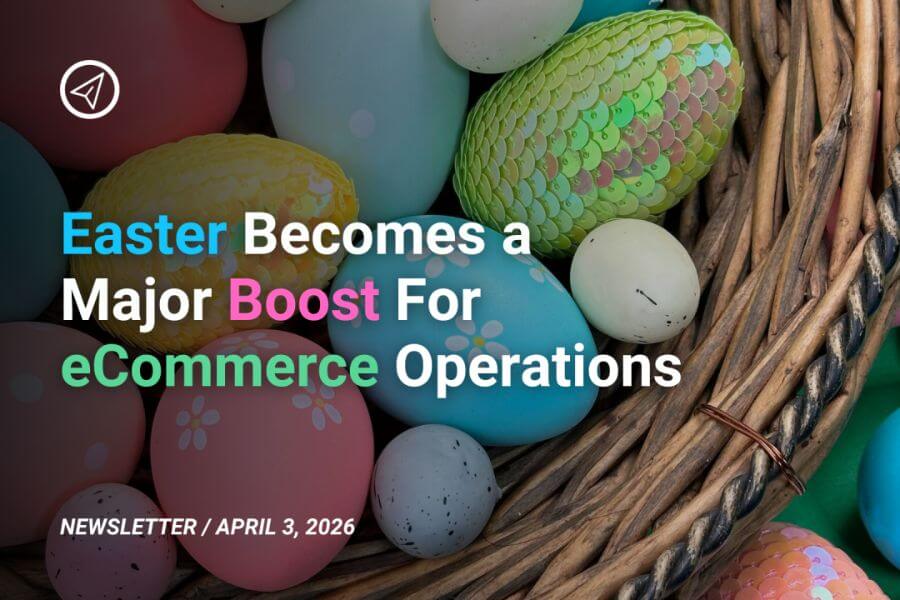
Consumers recognize Easter as being associated with chocolate eggs, pastel colours, and family traditions… But in 2026, it has evolved into something much bigger: a powerful, multi-category ecommerce moment.
While it doesn’t carry the same hype as Christmas or Black Friday, Easter is now one of the most dynamic seasonal retail events globally — driven by changing consumer behaviour, social commerce, and a growing appetite for premium experiences.
Here’s what’s defining Easter shopping in 2026.
🇺🇸 A $25 Billion Moment in the U.S.
In the United States, Easter spending has reached record levels; approaching $25 billion in 2026. That puts it on par with major retail periods like back-to-school season.
But what’s more interesting than the size is how people are spending.
Easter is no longer just about candy. Today’s shoppers are building “Easter baskets” that look more like curated gift bundles, filled with toys, clothing, beauty products, and even gift cards. Candy still plays a central role, but it’s now just one part of a broader, more intentional shopping experience.
Even the cultural drivers remain strong: the Easter Bunny continues to influence purchasing behaviour across generations, with around 80% of U.S. households celebrating in some form.
🛒 The Rise of Last-Minute Ecommerce
One of the most defining characteristics of Easter shopping is timing.
Unlike Christmas, where consumers plan weeks in advance, Easter remains a highly last-minute holiday. A significant share of purchases happens in the final days leading up to Easter Sunday.
This creates a unique ecommerce dynamic:
- Fast shipping becomes a competitive advantage
- Same-day delivery and click-and-collect surge
- Pre-built bundles outperform custom shopping journeys
In 2026, the winners aren’t just the brands with the best products—they’re the ones that can deliver them fastest.
🌍 A Global Shift Toward Premium and Experience
Across global markets, Easter is undergoing a clear transformation: from a low-cost, child-focused holiday to a premium, experience-driven retail moment.
Chocolate remains central, but the category is evolving. Brands like Lindt and Ferrero are seeing strong demand for:
- luxury chocolate eggs
- limited-edition collections
- gifting bundles designed for adults
Consumers are increasingly choosing fewer, higher-quality items over bulk purchases. Easter has become an opportunity to “treat yourself” as much as to give.
📱 Social Commerce Is Driving Discovery
Platforms like TikTok and Instagram are playing a major role in shaping demand:
- viral Easter basket ideas
- aesthetic home décor trends
- DIY baking kits and themed experiences
This shift has turned Easter into a discovery-driven holiday, where consumers often decide what to buy after seeing it online, not before.
🧺 “Easter-ification” of Ecommerce Categories
Perhaps the biggest change is how far Easter now reaches beyond confectionery.
Retailers are extending the holiday into:
- home décor and table settings
- baking and hosting kits
- seasonal fashion (pastels spike every year)
- personalised and curated gift boxes
In other words, Easter is becoming less of a single-category event and more of a seasonal lifestyle moment — similar to how autumn or Christmas influences multiple retail verticals.
🌱 Sustainability and Conscious Spending
Sustainability is also shaping Easter purchases, particularly in Europe and other mature ecommerce markets.
Consumers are increasingly looking for:
- plastic-free packaging
- ethically sourced cocoa
- vegan or plant-based alternatives
At the same time, shoppers are balancing cost-consciousness with indulgence. The dominant mindset in 2026 is “value + treat yourself”—seeking deals while still splurging on meaningful or premium items.
🌏 A Holiday That Looks Different Everywhere
Despite its global reach, Easter remains highly localised:
- In the U.S., baskets are large and multi-category
- In the UK and Europe, chocolate eggs dominate (especially from brands like Cadbury)
- In Australia, the Easter bilby replaces the bunny
- In Asia, Easter is still emerging, often driven by retail and entertainment experiences
For ecommerce brands, this means one thing: localization is essential.
🐣 The Bottom Line
Easter in 2026 is no longer just a chocolate holiday. It is:
- a multi-billion-dollar ecommerce event
- a last-minute shopping surge
- a premium gifting opportunity
- and a social media–driven discovery moment
For retailers and brands, the takeaway is clear: those who treat Easter as a minor seasonal spike risk missing one of the most quietly powerful opportunities in the retail calendar.