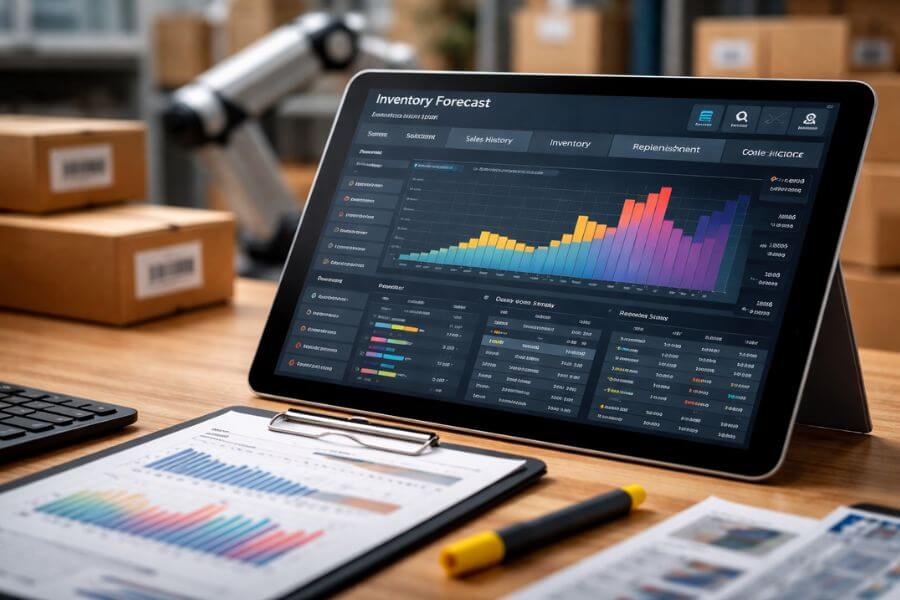
Inventory forecasting has always been one of the hardest parts of running an ecommerce business. If you order too much stock, you lose money on storage and unsold products. If you order too little, you face stockouts, delayed orders, and unhappy customers. In 2026, artificial intelligence is changing how you solve this problem. Instead of guessing demand using spreadsheets or simple reports, you can now use AI tools that analyze sales history, seasonality, trends, promotions, and even customer behavior to help you make smarter inventory decisions.
Modern AI forecasting tools can help you reduce overstock, prevent stockouts, improve cash flow, and make your supply chain more predictable. Many of these platforms also connect directly with ecommerce platforms, warehouses, and fulfillment providers, making them practical for growing brands. If you run an online store or manage operations, these tools can help you make better decisions without needing advanced technical knowledge. In this article, you will discover ten AI tools that are transforming inventory forecasting in 2026 and why they matter for your business.
1. Netstock
Netstock is one of the most recognized AI-powered inventory planning platforms designed to help you optimize stock levels and improve forecasting accuracy. The platform analyzes historical sales data, supplier lead times, and demand patterns to recommend how much inventory you should order and when. What makes Netstock powerful is its ability to simplify complex forecasting into easy-to-understand dashboards, making it accessible even if you do not have a data science background. You can also identify slow-moving inventory and reduce excess stock before it affects your cash flow. If you want better visibility across your inventory planning process while reducing risk, this tool can help you make more confident purchasing decisions.
2. Lokad
Lokad focuses heavily on predictive optimization using advanced machine learning models. This tool is designed for companies that want to move beyond basic forecasting and into deeper supply chain optimization. It helps you forecast demand, optimize pricing, and manage inventory risks using probability-based models. While Lokad is more technical than some other tools, it offers strong customization and flexibility for businesses that want a more advanced approach. You can use it to simulate different demand scenarios and prepare for uncertainty. If your ecommerce operation is growing quickly and you want forecasting that adapts to changing conditions, Lokad gives you powerful tools to stay ahead.
3. StockIQ
StockIQ is built to help businesses balance demand planning, supply planning, and inventory optimization in one place. The AI-driven forecasting engine analyzes your order history, customer trends, and supplier performance to help you maintain the right inventory levels. One of the biggest advantages is how it highlights risks before they become problems, such as potential stock shortages or excess inventory. The system also allows you to create different forecasting scenarios so you can prepare for promotions or seasonal spikes. If you want a structured way to move from reactive inventory management to proactive planning, StockIQ provides a practical solution that can grow with your business.
4. ToolsGroup
ToolsGroup is known for helping retailers and ecommerce brands forecast demand more accurately using AI and probabilistic modeling. Instead of relying on single-number forecasts, the platform evaluates multiple possible demand outcomes so you can plan with more confidence. This approach helps reduce both overstock and lost sales. The system also helps automate replenishment decisions, which can save your team significant time. Many companies use ToolsGroup to improve service levels while reducing working capital tied up in inventory. If your goal is to improve product availability while lowering inventory costs, this platform gives you the insights needed to make smarter tradeoffs.
5. Inventory Planner
Inventory Planner is a popular choice among ecommerce brands because it integrates easily with platforms like Shopify and Amazon. The AI features analyze your sales trends and recommend reorder points, purchase quantities, and restock timing. What makes it especially useful is how simple it is to use compared to traditional forecasting software. You can quickly see which products are performing well and which ones may become dead stock. The tool also supports multi-warehouse planning, which is useful if you work with fulfillment partners. If you want a forecasting tool that is practical, easy to learn, and designed specifically for ecommerce, Inventory Planner is worth considering.
6. Relex Solutions
Relex Solutions offers AI-driven forecasting and replenishment tools that are often used by large retailers, but the technology is becoming more accessible to mid-sized ecommerce companies as well. The platform uses machine learning to analyze demand signals such as promotions, pricing changes, and seasonal behavior. One of its biggest strengths is how it connects forecasting with real operational decisions like replenishment and allocation. This helps you move from planning to execution without gaps. If your business deals with complex product catalogs or multiple distribution points, Relex can help you maintain balance across your inventory network.
7. Flieber
Flieber is designed specifically for fast-growing ecommerce brands that want better demand forecasting without needing a large operations team. The AI analyzes your sales velocity, lead times, and product performance to recommend when and how much to reorder. It also helps you understand how inventory decisions affect cash flow, which is important for scaling brands. Many ecommerce founders like Flieber because it focuses on practical decision-making rather than complicated theory. If you are trying to scale your ecommerce business while avoiding common inventory mistakes, this tool can help you stay organized and financially efficient.
8. Forecastly
Forecastly focuses on helping ecommerce sellers automate their demand forecasting and purchasing workflows. The platform uses AI to track demand patterns and automatically suggest purchase orders based on predicted needs. This can save significant time compared to manual forecasting. The system also helps you identify which products are worth restocking and which may not justify additional investment. If your goal is to remove guesswork from your purchasing process and rely more on data-driven decisions, Forecastly can help you operate with more confidence and less stress.
9. Anaplan
Anaplan is a connected planning platform that uses AI to help businesses align forecasting across finance, operations, and supply chain teams. This is especially useful if your inventory decisions affect multiple departments. Instead of working in separate systems, you can build a unified view of demand planning and inventory strategy. The platform also allows scenario planning so you can prepare for market changes or supply disruptions. If your organization wants to improve collaboration while making forecasting more strategic, Anaplan provides a strong foundation for long-term planning.
10. Blue Yonder
Blue Yonder is a well-known supply chain AI platform that focuses on end-to-end forecasting and inventory optimization. The system uses machine learning to analyze demand signals across multiple channels and predict future inventory needs. One of its key advantages is its ability to adapt forecasts as new data becomes available. This means your plans can stay relevant even as conditions change. Companies that deal with complex supply chains often use Blue Yonder to improve resilience and responsiveness. If you want a forecasting solution that combines AI insights with operational execution, this platform offers strong capabilities.
Conclusion
AI is transforming inventory forecasting from a reactive process into a proactive strategy. Instead of relying on basic reports or intuition, you can now use intelligent systems that analyze patterns, predict demand, and recommend clear actions. The tools listed above show how forecasting is becoming more automated, more accurate, and more connected to real business decisions. Whether you run a small ecommerce store or manage a large supply chain, adopting AI forecasting tools can help you reduce risk, improve customer satisfaction, and operate more efficiently. As ecommerce competition continues to grow in 2026, businesses that use AI-driven inventory forecasting will have a strong advantage over those that still rely on manual planning.
Frequently Asked Questions
What is AI inventory forecasting?
AI inventory forecasting uses artificial intelligence and machine learning to predict future product demand. These systems analyze historical sales, trends, seasonality, and operational data to help you decide how much inventory to order and when. This helps reduce stockouts and excess inventory.
Why is inventory forecasting important for ecommerce?
Inventory forecasting helps you maintain the right stock levels. This prevents lost sales from stockouts and avoids tying up cash in slow-moving inventory. Good forecasting also improves customer satisfaction because products are available when customers want them.
Can small ecommerce businesses use AI forecasting tools?
Yes, many modern AI forecasting tools are designed for small and mid-sized ecommerce businesses. Some platforms are easy to use and integrate directly with ecommerce systems, making them accessible even if you do not have a technical background.
How accurate are AI inventory forecasts?
AI forecasts are usually more accurate than manual forecasting because they analyze large amounts of data and detect patterns humans may miss. However, accuracy still depends on data quality, consistent tracking, and how often forecasts are updated.
Do AI forecasting tools replace inventory managers?
AI tools do not replace inventory managers. Instead, they help them make better decisions. These tools automate calculations and provide insights, but human judgment is still important for handling exceptions, supplier issues, and business strategy.
How long does it take to implement an AI forecasting tool?
Implementation time depends on the tool and your data readiness. Some ecommerce focused tools can be set up in days, while enterprise platforms may take several weeks or months. Clean and organized data usually speeds up implementation.
What data do AI inventory tools need?
Most AI forecasting tools need sales history, product data, supplier lead times, and inventory levels. Some tools also use marketing data, seasonality trends, and pricing changes to improve forecast accuracy.
Can AI help prevent stockouts?
Yes, AI forecasting tools can predict when inventory will run low and recommend reorder points. This allows you to restock before shortages happen, helping you maintain consistent product availability and protect customer satisfaction.
Are AI inventory tools expensive?
Pricing varies depending on the platform and features. Some tools offer affordable plans for small businesses, while advanced enterprise solutions cost more. Many companies find the investment worthwhile because better forecasting reduces costly inventory mistakes.
What is the future of AI in inventory management?
AI will continue to automate more decisions in inventory management. Future systems will likely offer real-time forecasting, deeper automation, and better integration with logistics providers. Businesses that adopt these tools early will be better prepared for changing market demands.